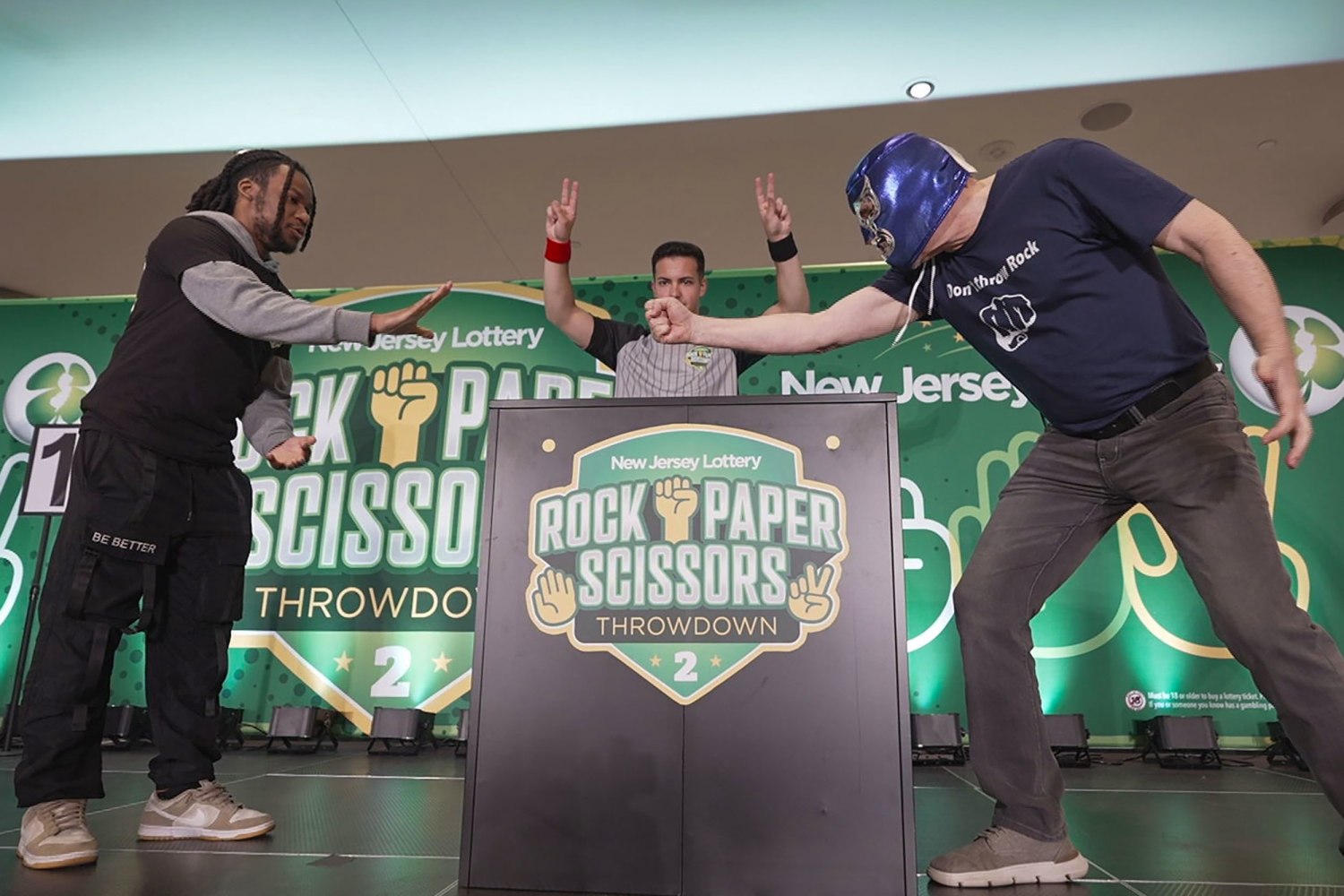
The age-old game of rock, paper, scissors, a staple of playgrounds and backyard disputes, took center stage in a grand tournament at the American Dream mall in East Rutherford, New Jersey. Here, 384 spirited contestants converged for a chance to transform childhood nostalgia into a $10,000 payday, all courtesy of the New Jersey Lottery. Over three intense days, the contenders engaged in a sequence of nail-biting rounds, cheered on by enthusiastic spectators and judged by vigilant referees who guaranteed fair play by closely monitoring the timing and formation of each throw. Historically, the origins of rock, paper, scissors can be traced to 206 BCE in ancient China, where it was played with symbols representing a frog, a snake, and a centipede. By the 17th century, it had morphed in Japan, and from there evolved to the universal hand game we know today. As the competition progressed, it became clear that strategy wasn't the only factor at play. For some, like Michelle Womack, who was eliminated by her own son Mike, familiarity with opponents added personal twists to the gameplay. Others, like psychologist Mark Lyall, unsuccessfully turned to social psychology and statistical analysis to outsmart their adversaries, only to find that simplicity often reigned supreme. Among the many strategies employed, the most surprising was no strategy at all. Many participants, including the eventual champion, 29-year-old Julio Rivera, chose to rely on instinct. Rivera, a veterinary assistant, ultimately bested Kosty Yablon in a tense best-of-seven final, walking away with not only the $10,000 prize but also the admiration of onlookers who found heart in his emotional and focused demeanor. Yablon's second-place finish rewarded him with $5,500. For Rivera, not overthinking became his weapon, illustrating that sometimes the most profound strategies lie within simple confidence and instinct. The event was a testament to the timeless appeal of rock, paper, scissors—a game that continues to captivate hearts with its balance of chance and psychology. For all participants, whether walking away with winnings or a simple smile, the tournament offered a revival of childhood wonder and a reminder of the joy found in life’s simplest games.
Your email address will not be published. Required fields are marked *